1 September 2026·10 min read·No. 17·Wider thought leadership
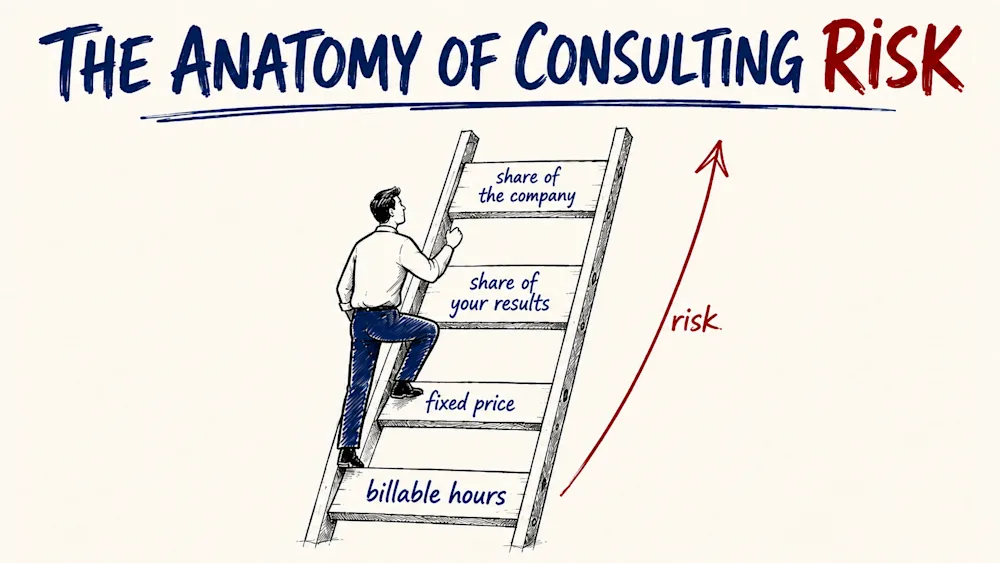
Consultants price their work differently, and not only because of different expertise. A big part of any consulting price is the risk the consultant is willing to undertake. You can see it on my own practice: if you ever decide to work with me and open my website, you will find three depths:...
Read article →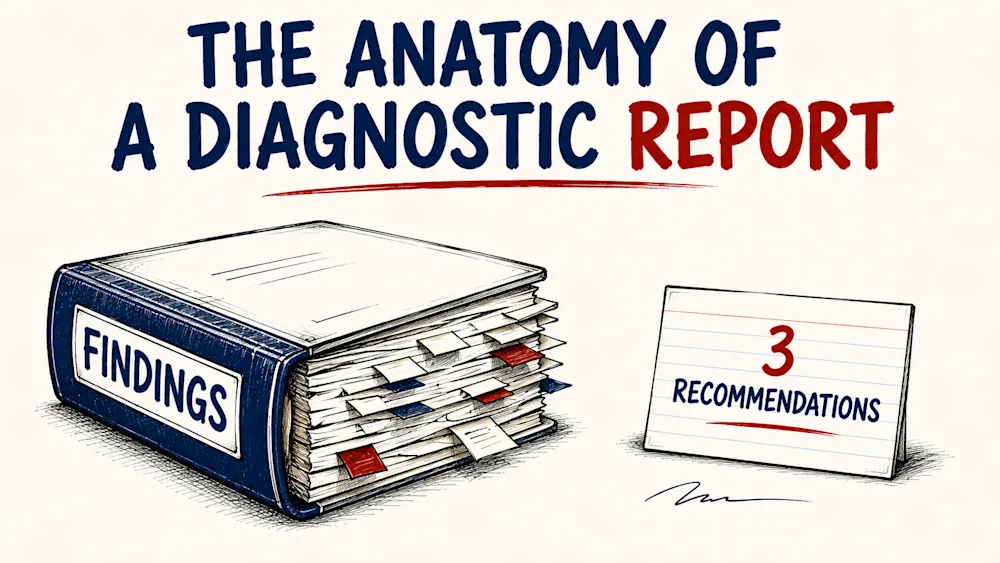
25 August 2026·7 min read·No. 16·Stage 7: Verdict
You have seen the report. Maybe you have written one. Sixty pages, properly bound, a cover with the client's logo on it, an executive summary that is somehow six pages long. It landed on the founder's desk with a satisfying weight, everyone agreed it was thorough, and then nothing happened. Six...
Read article →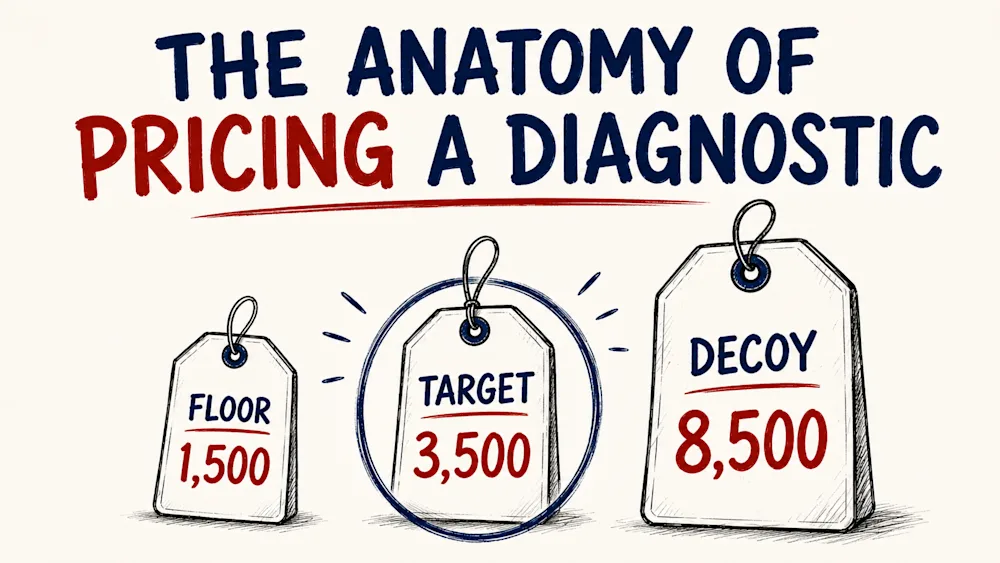
18 August 2026·7 min read·No. 15·Wider thought leadership
Last week I showed you the ladder that carries a stranger to the diagnostic conversation. So let us say the ladder worked. The prospect climbed, the call happened, they want the diagnostic. And now comes the moment that undoes more consultants than any objection: you say a number.
Read article →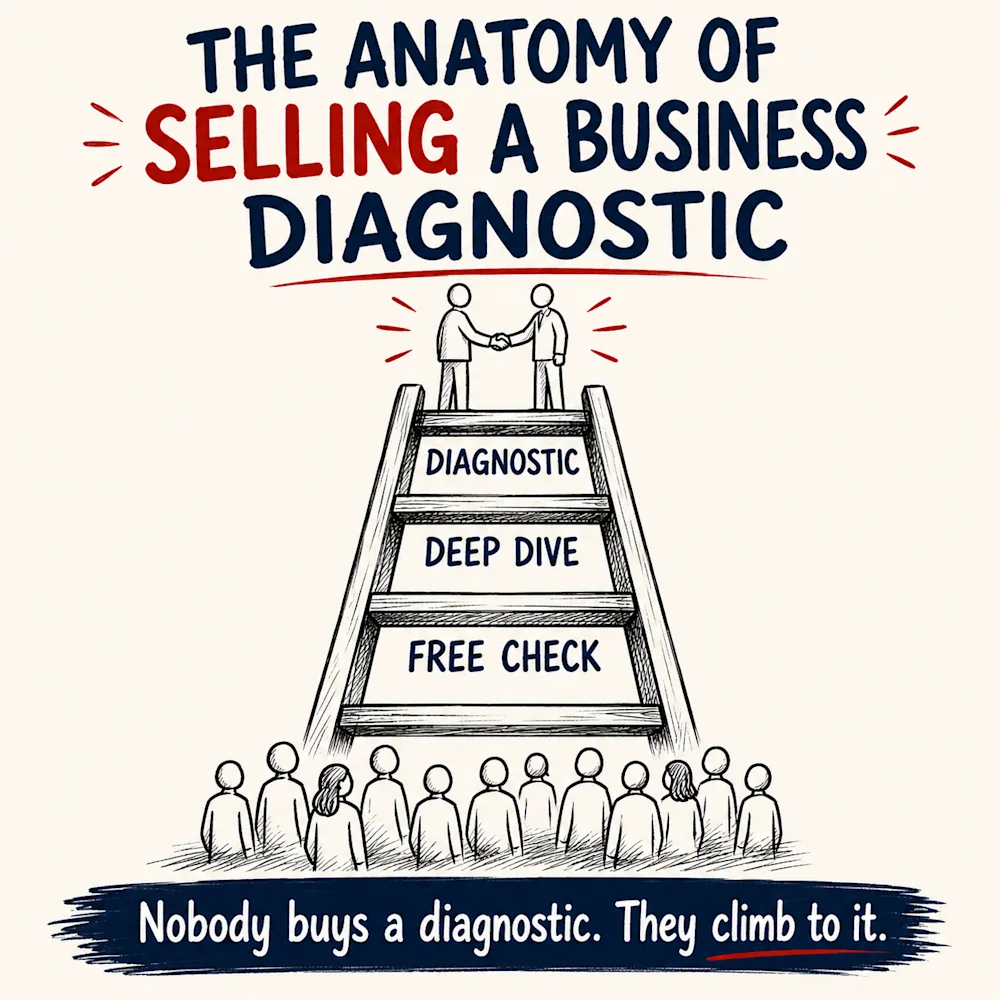
11 August 2026·9 min read·No. 14·Wider thought leadership
This week, in the comments under one of my posts, I wrote a sentence that probably deserved a longer answer: identifying the operational root cause, the actual diagnostic, is something the client undervalues, and often is not willing to pay for.
Read article →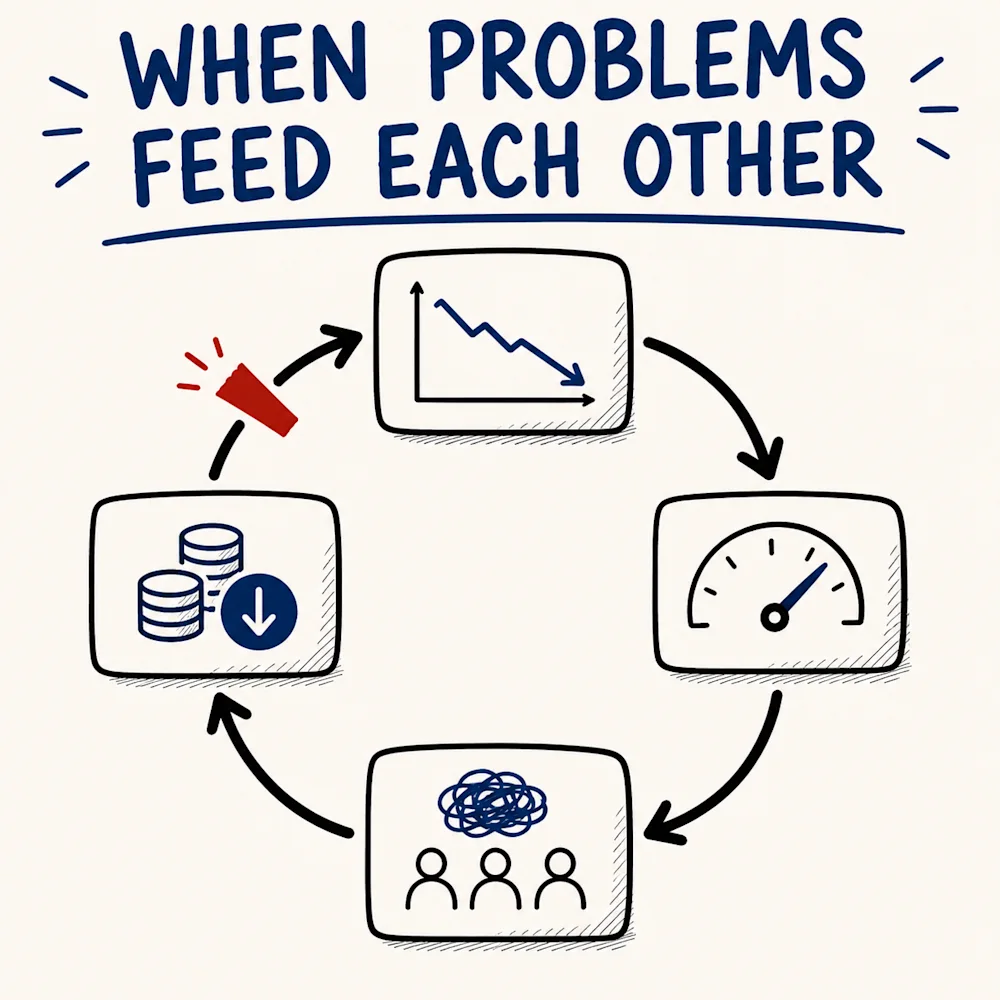
4 August 2026·7 min read·No. 13·Stage 6: Synthesis
Over the last few issues, we have been building one idea layer by layer. First, that a symptom is not the problem: weak sales are almost always a mirror of something upstream. Then, that a problem can hide by going wide, spreading across departments where no single specialist can catch it. Then,...
Read article →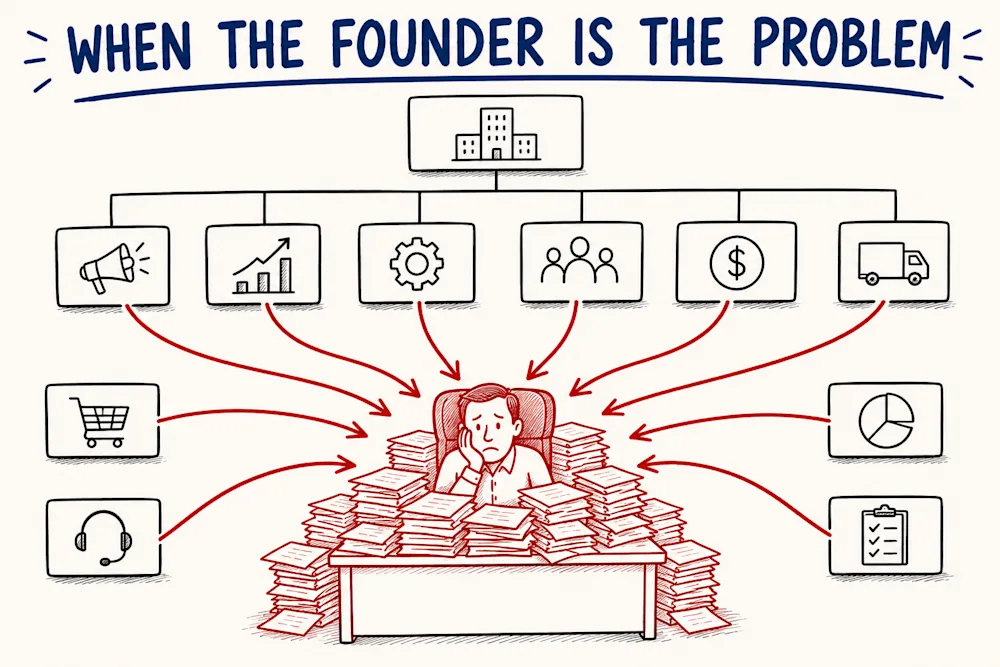
28 July 2026·8 min read·No. 12·Stage 5: Findings
Run enough diagnostics in small companies and one root cause comes back more often than any other. It is not pricing. It is not the funnel. It looks like this: every approval waits for one signature, the biggest clients all live in one person's phone, and the whole company quietly holds its...
Read article →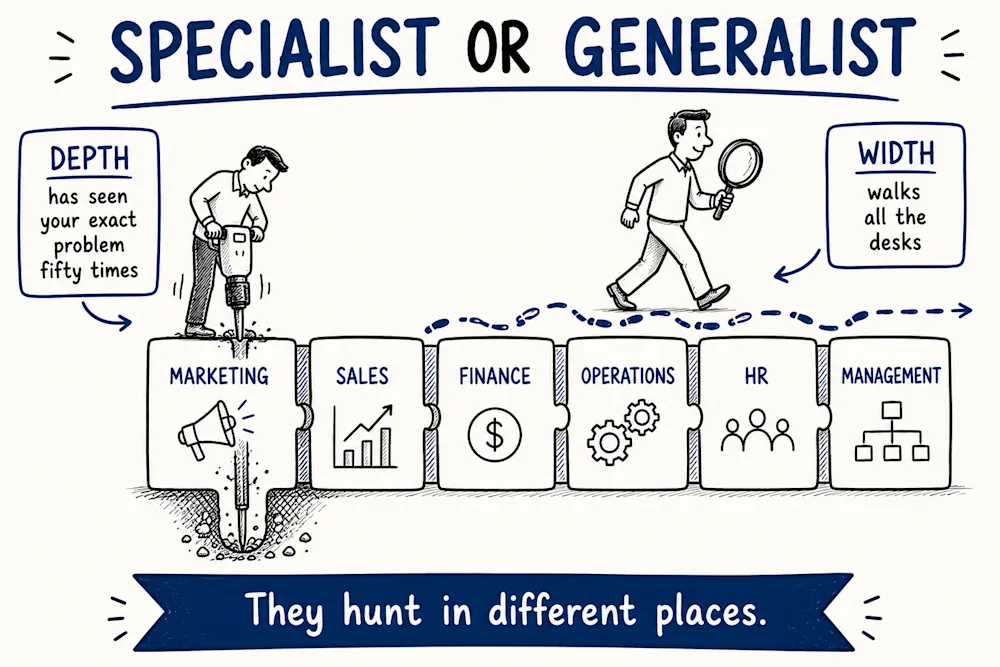
21 July 2026·7 min read·No. 11·Stage 6: Synthesis
Every owner runs a free diagnostic on their own company, every single day. It has no methodology and no report, but it works. Anything weak that they can see, they fix. A broken process, a wrong price, a supplier who slips. Seen, fixed, forgotten. Owners are smart: if they can see it, they can...
Read article →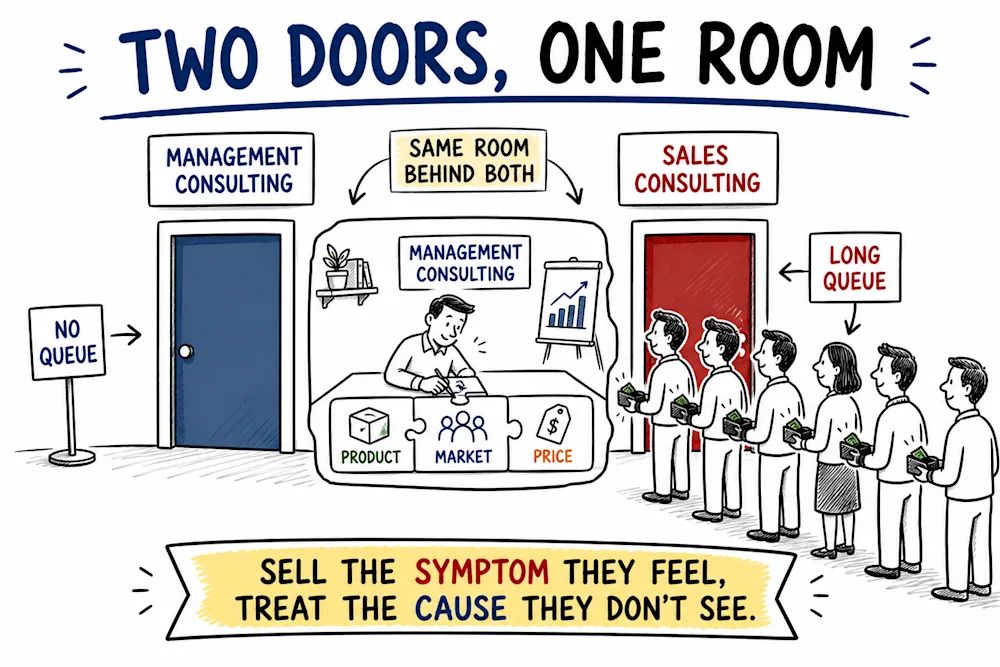
14 July 2026·5 min read·No. 10·Wider thought leadership
Not long ago I was sitting with the owner of a marketing agency, and he asked me to help him with his sales. They were soft, or at least not where he wanted them, and he wanted to know what to do.
Read article →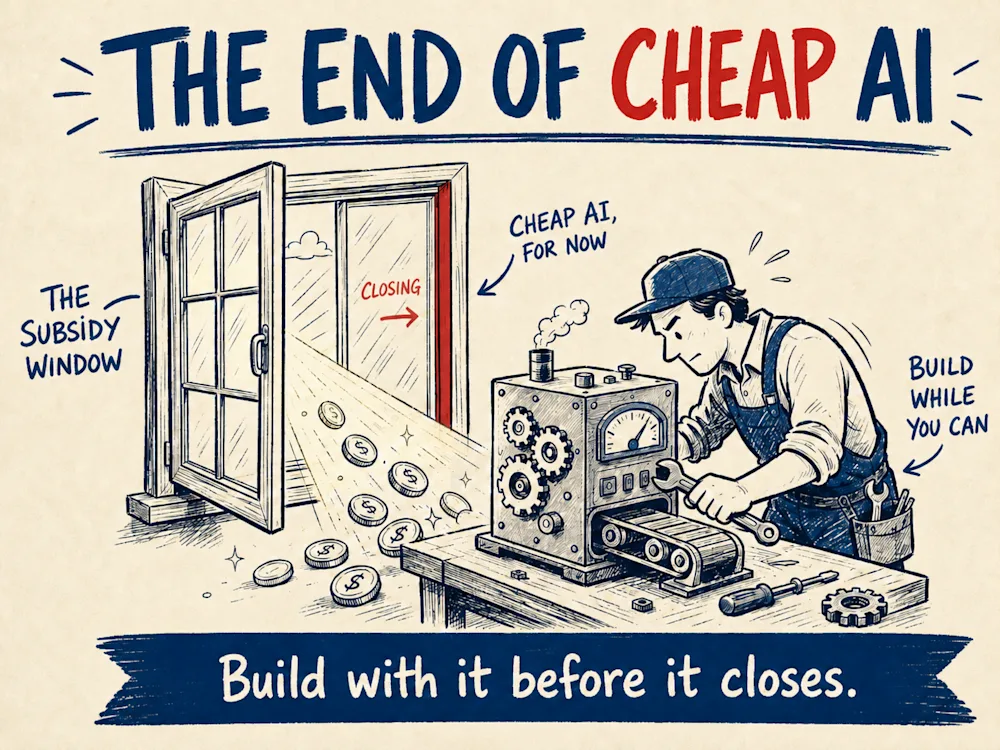
5 July 2026·13 min read·No. 9·Wider thought leadership
In December, Uber gave around five thousand of its engineers access to AI coding tools. By April, four months later, the company had burned through its entire AI budget for the year. Not the quarter. The year. Fortune reported that Uber's own operations chief was left asking, out loud, whether...
Read article →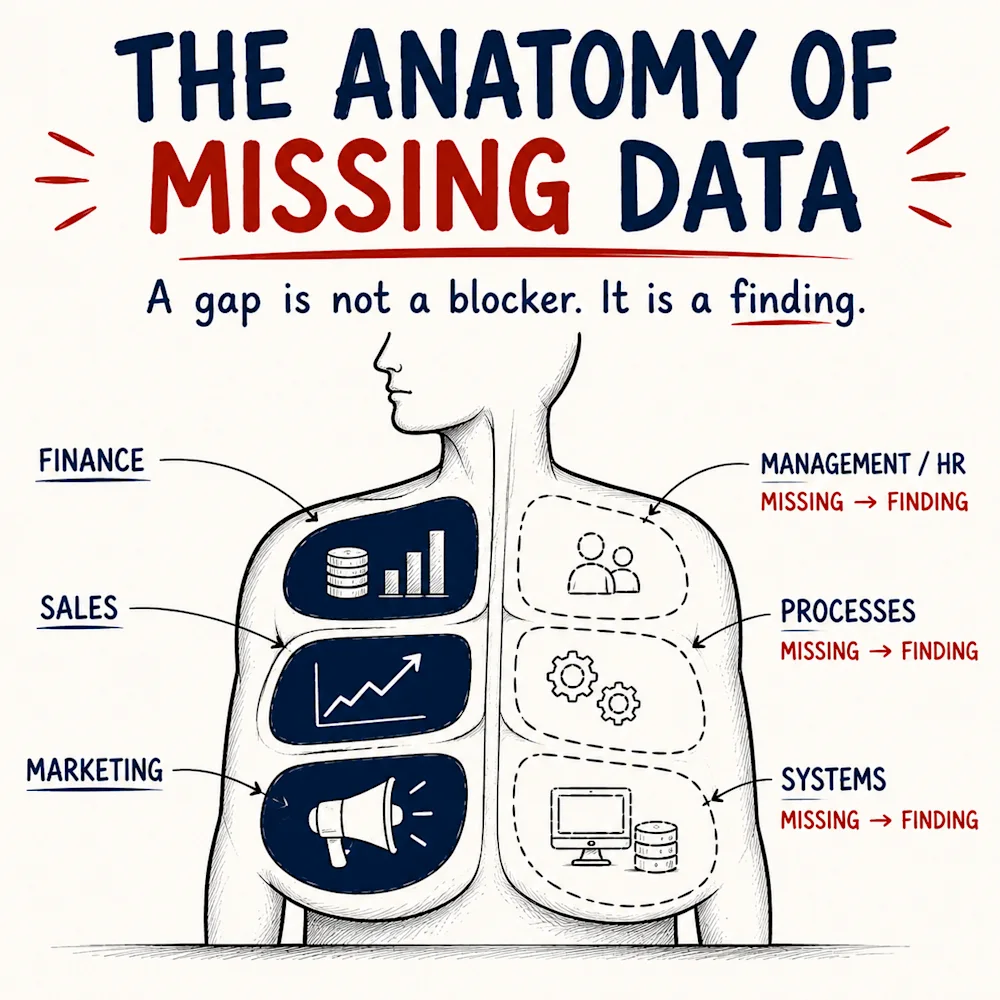
1 July 2026·9 min read·No. 8·Stage 5: Findings
As a management consultant, I have run business diagnostics more times than I can count, and the same small moment keeps coming back in almost every one. You ask for the number, and it is not there. Nobody can tell you which customers actually make money. There is no org chart. The cash "is in a...
Read article →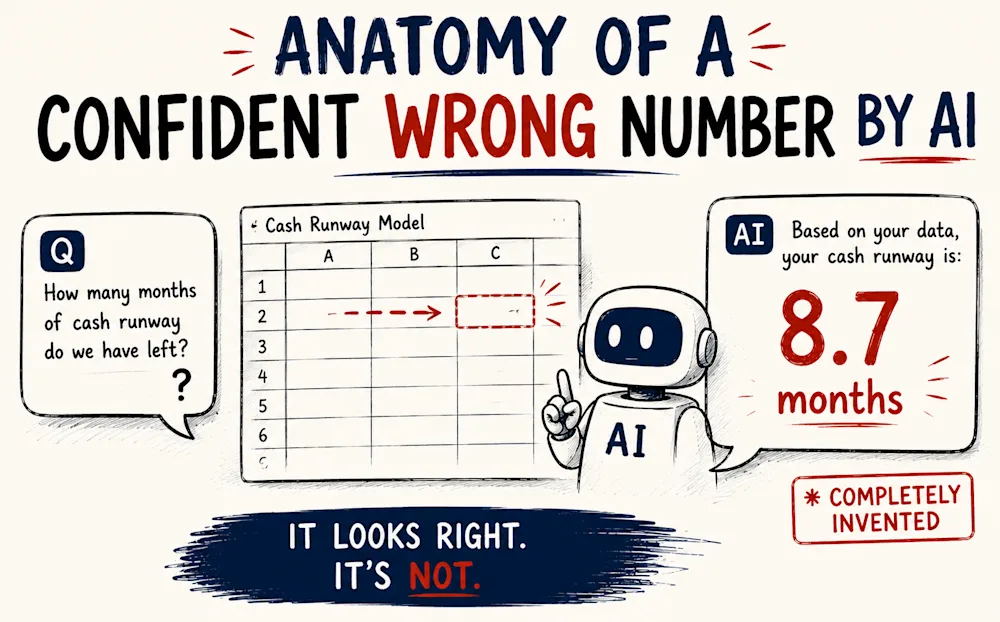
28 June 2026·11 min read·No. 7·Stage 3: Questions
A while ago a business owner came to see me, genuinely excited. He had been at a presentation where someone demonstrated an AI tool, and it had stayed with him. The presenter typed in an ordinary question, the tool answered in two seconds, and it even pointed back to the document the answer came...
Read article →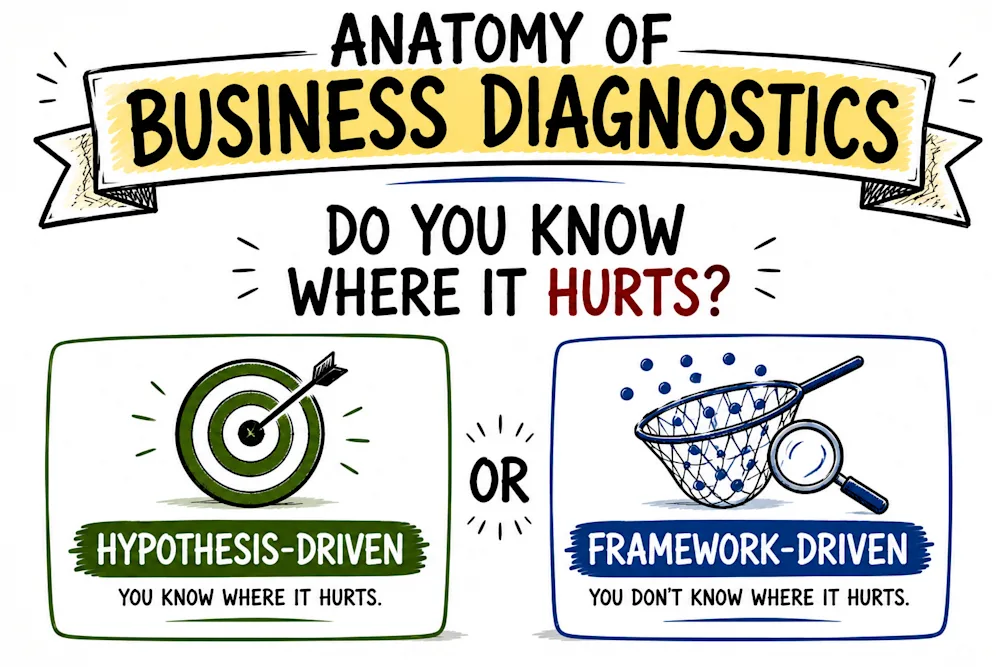
24 June 2026·7 min read·No. 6·Stage 2: Lens
We all have a default. Some of us open every engagement with a hypothesis and go straight at it. Others reach for a framework and start filling it in - the SWOT, the five forces, the checklist. Both are legitimate ways to run a diagnostic. The mistake is choosing the mode out of habit instead of...
Read article →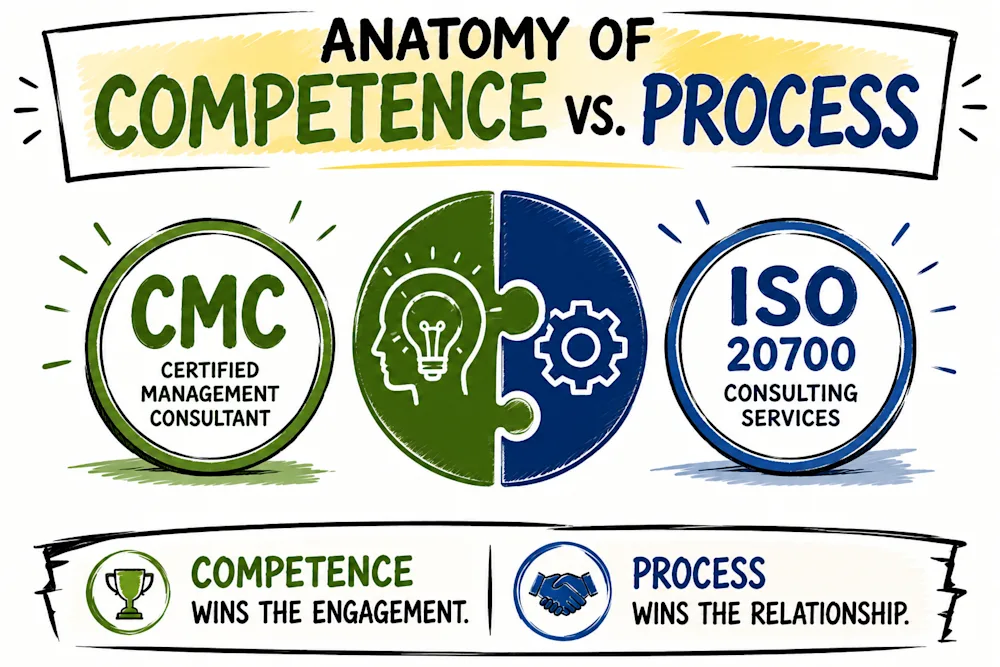
15 June 2026·4 min read·No. 5·Wider thought leadership
Ask a room of consultants what makes one of us worth hiring and you will get a hundred answers about competence. Years of experience. The right credentials. A real track record. Who is actually any good.
Read article →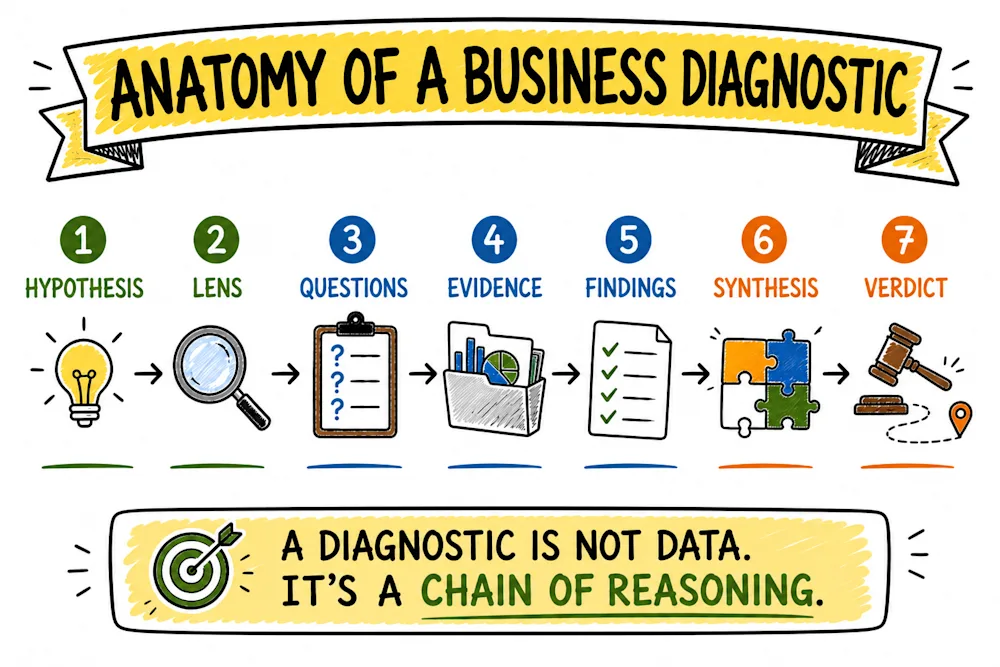
10 June 2026·9 min read·No. 4·Stage 1: Hypothesis
Most things sold as a business diagnostic are not diagnostics. They are questionnaires that spit out a score, or thick reports that list everything and conclude nothing. And here is the uncomfortable part for us: plenty of those come from consultants.
Read article →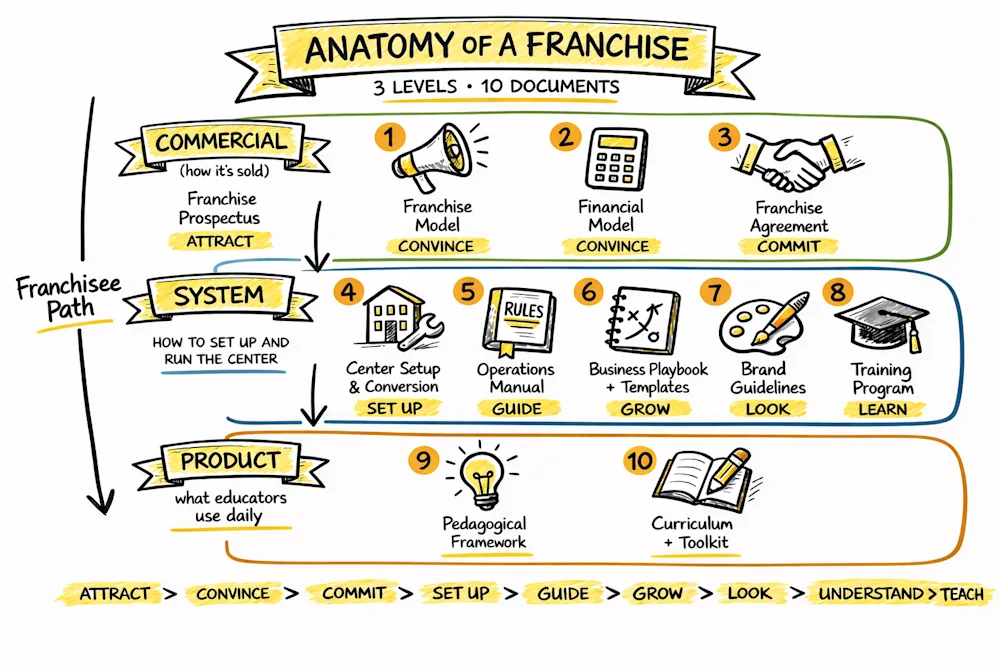
7 June 2026·7 min read·No. 3·Stage 2: Lens
A great business spots a new opportunity - say, turning its success into a franchise - and hires a consultant to help capture it. Get generic advice, though, and you can pour months and money into the wrong move and miss the opening. Real advice is the opposite: researched, measured, specific....
Read article →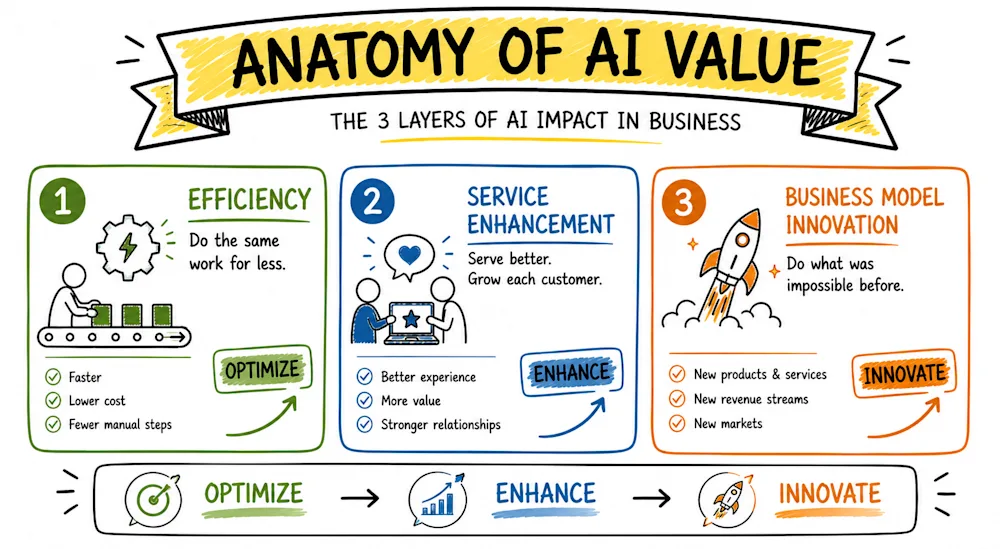
4 June 2026·8 min read·No. 2·Wider thought leadership
Every client who calls about AI says almost the same thing. "We want to use AI to cut costs." Sometimes it is "automate this," sometimes "do more with fewer people," but the wish underneath is the same: spend less.
Read article →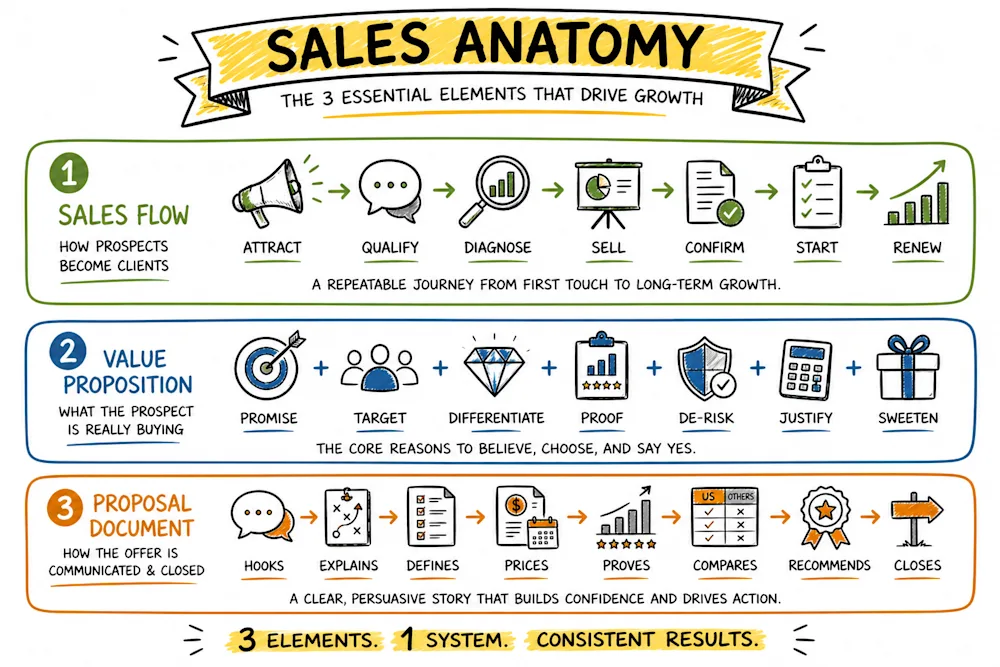
30 May 2026·6 min read·No. 1·Wider thought leadership
A diagnostic shows where growth is leaking. Turning that into real growth takes a sales offer built for your market, not a generic "improve your sales" template. So I built a framework for it, the Anatomy of a Sales Offer, and I tailor it to each client. Here's the framework, and how the same...
Read article →