Skip to content

A practitioner publication

Better consulting starts with a better diagnosis.

Practical thinking on how to move from the presenting symptom to evidence, connected findings and a verdict a business can act on. Seventeen editions are published, and a new one arrives through LinkedIn.

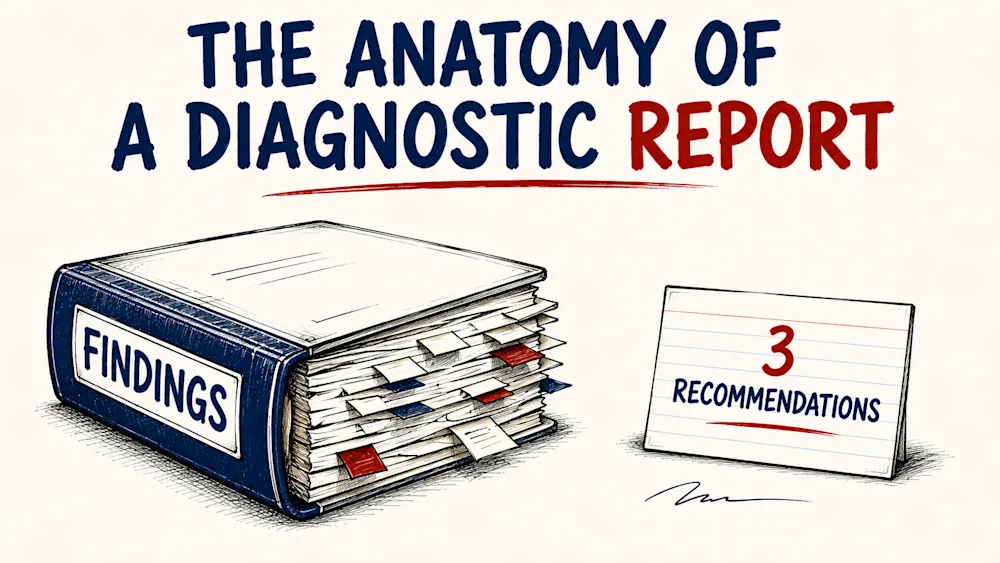
A thick binder labelled findings, stuffed with paper tabs, beside a small signed card reading three recommendations.
25 August 20267 min read

The Diagnostic Report: A Verdict, Not a Binder

You have seen the report. Maybe you have written one. Sixty pages, properly bound, a cover with the client's logo on it, an executive summary that is somehow six pages long. It landed on the founder's desk with a satisfying weight, everyone agreed it was thorough, and then nothing happened. Six...
A diagnostic is a chain of reasoning

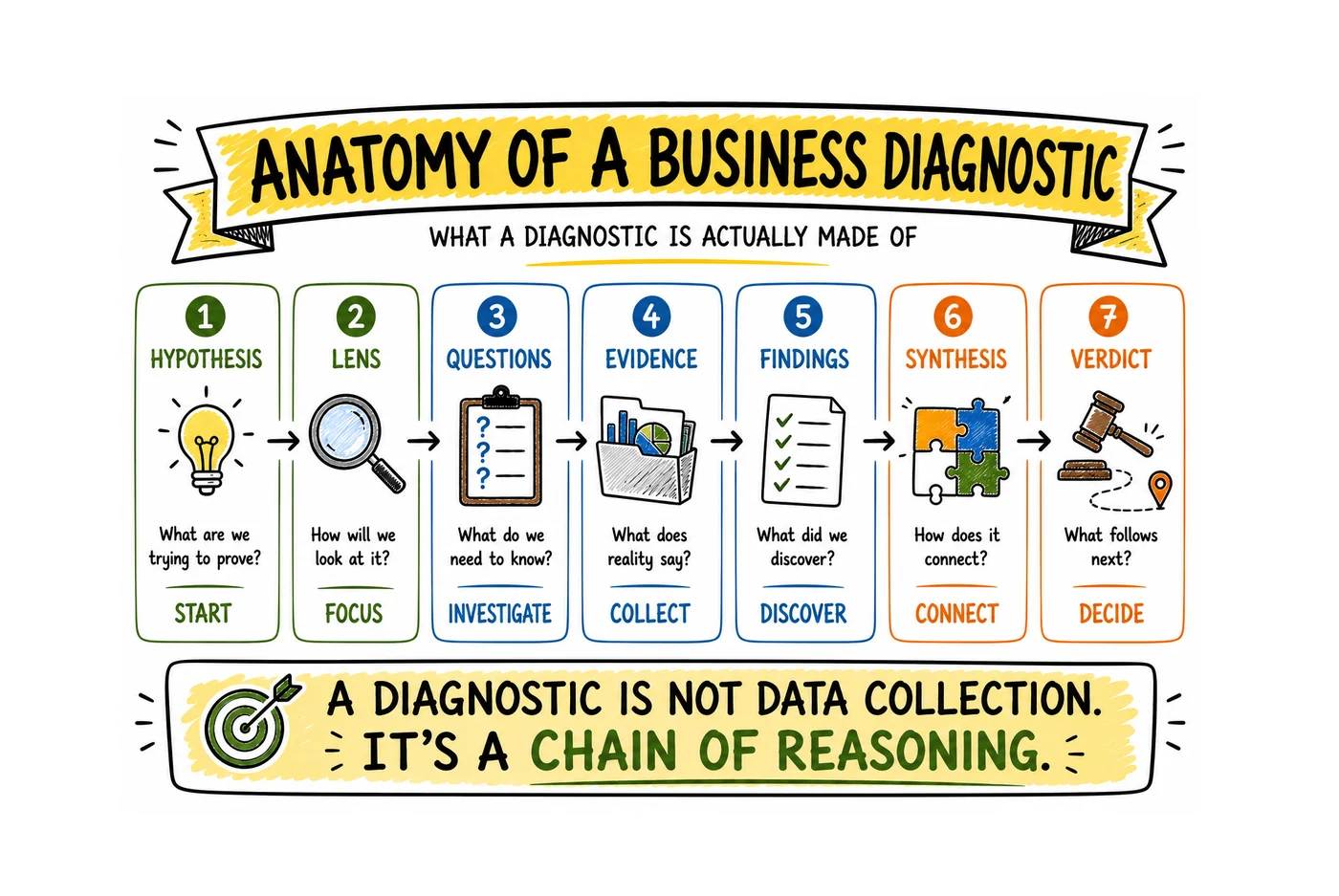
Seven links take you from a working hypothesis to a verdict. Every link has to hold, and skipping one leaves the links after it with nothing to stand on. Use them as a reading guide, not a rigid process.

The seven links of a business diagnostic: hypothesis, lens, questions, evidence, findings, synthesis and verdict.
  1. 01HypothesisWhat are we trying to prove?
  2. 02LensHow will we look at it?
  3. 03QuestionsWhat do we need to know?
  4. 04EvidenceWhat does reality say?
  5. 05FindingsWhat did we discover?
  6. 06SynthesisHow does it connect?
  7. 07VerdictWhat follows next?

Latest articles

View all
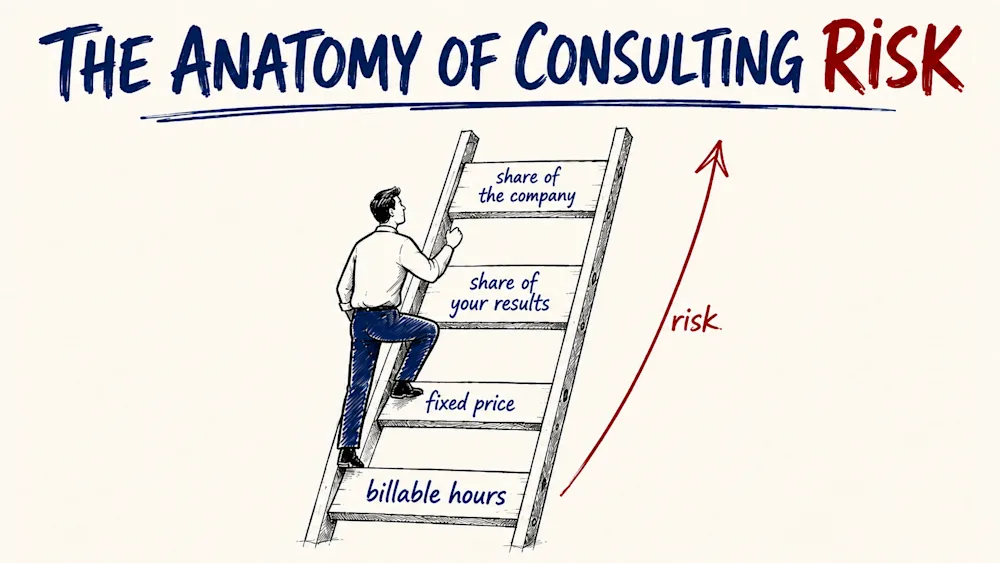
A consultant climbing a four-step ladder from billable hours to a share of the company, with a rising arrow labelled risk.
1 September 202610 min read

The 4 Stages of the Entrepreneurial Consultant

Consultants price their work differently, and not only because of different expertise. A big part of any consulting price is the risk the consultant is willing to undertake. You can see it on my own practice: if you ever decide to work with me and open my website, you will find three depths:...

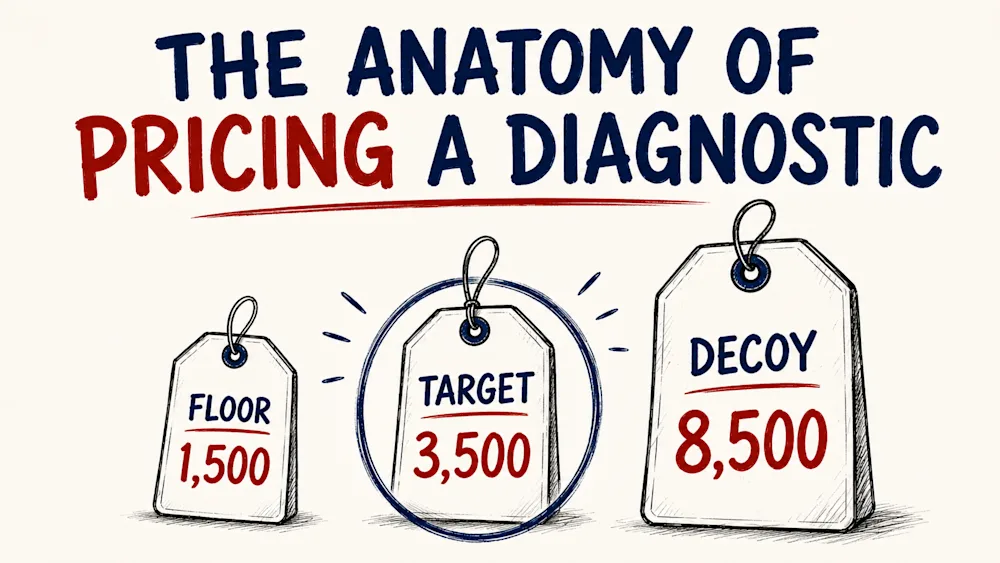
Three price tags for the same diagnostic, a floor at 1,500, the target at 3,500 circled, and a decoy at 8,500 that makes the target look reasonable.
18 August 20267 min read

Let Them Compare You With You: Why Your Best Offer Should Never Stand Alone

Last week I showed you the ladder that carries a stranger to the diagnostic conversation. So let us say the ladder worked. The prospect climbed, the call happened, they want the diagnostic. And now comes the moment that undoes more consultants than any objection: you say a number.

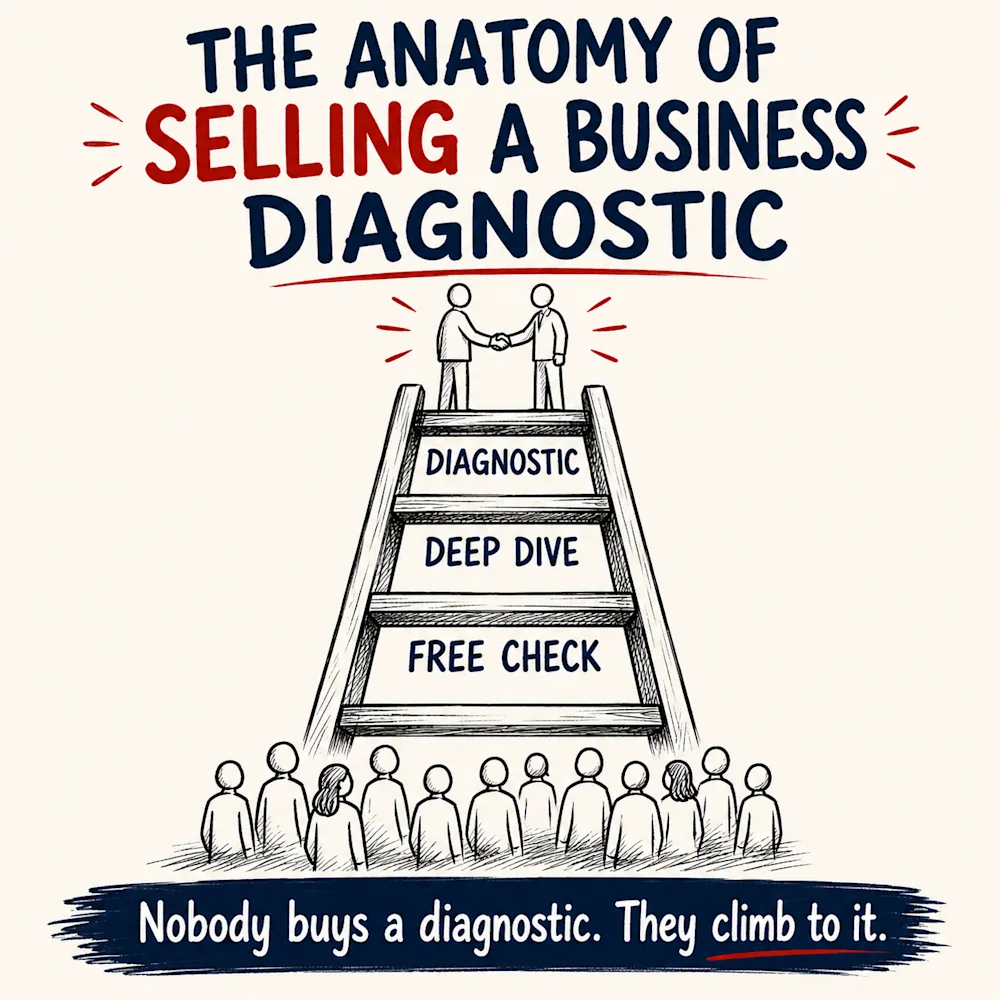
A crowd standing at the foot of a three-rung ladder, free check, then deep dive, then diagnostic, with a handshake at the top, under the line nobody buys a diagnostic, they climb to it.
11 August 20269 min read

How to Sell a Diagnostic: The Ladder That Does It for You

This week, in the comments under one of my posts, I wrote a sentence that probably deserved a longer answer: identifying the operational root cause, the actual diagnostic, is something the client undervalues, and often is not willing to pay for.

In development

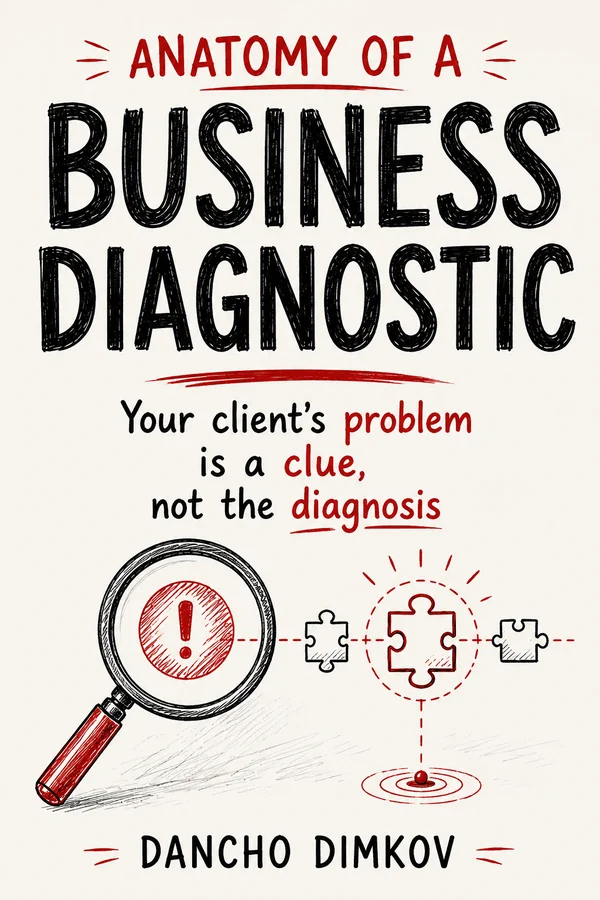
Anatomy of a Business Diagnostic

Your client's problem is a clue, not the diagnosis

The publication is the book being written in the open. Each edition takes one part of the diagnostic apart, and the diagrams that work end up shaping the chapters.

About the book
Anatomy of a Business Diagnostic by Dancho Dimkov, book cover.
Dancho Dimkov

Meet the author
Dancho Dimkov

Dancho is a management consultant, coach and author. Anatomy of Consulting draws on more than 600 client engagements and his doctoral research into how small businesses adopt AI.

A new edition, every week

The diagnosis, the reasoning and the verdict. It arrives through LinkedIn, which is the only place this publication asks you for anything.